Carnosine
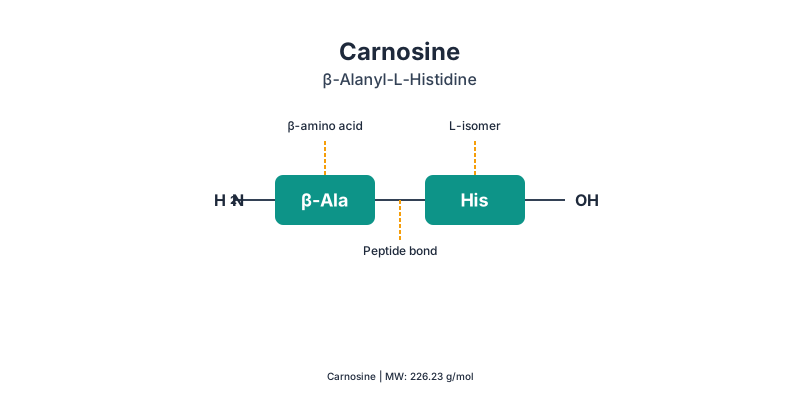
L-Carnosine (Beta-Alanyl-L-Histidine)
Carnosine is a naturally occurring dipeptide made of beta-alanine and L-histidine, found mostly in your fast-twitch muscle fibers and brain tissue. Standard oral carnosine is largely useless for systemic delivery because an enzyme called serum carnosinase shreds it in the blood before it ever reaches your muscles. That's why smart athletes supplement with beta-alanine to boost internal carnosine levels, while longevity researchers use targeted delivery methods to exploit carnosine's massive anti-glycation properties.
Purity
99%+
Molecular Weight
226.23 g/mol
Administration
Oral
Storage
Store raw powder at room temperature in a sealed, dry container away from direct light
Mechanism of Action
Internally, carnosine acts as a heavy-duty intracellular buffer, soaking up the hydrogen ions that cause muscle failure during high-intensity training. More importantly for longevity, it acts as a sacrificial sink for reactive sugars, preventing the formation of Advanced Glycation End-products (AGEs) that stiffen tissues and age your cardiovascular system. It also chelates heavy metals like copper and zinc, pulling them out of neurological tissues where they would otherwise drive oxidative stress.
Sequence:
Beta-Alanyl-L-Histidine
Chemical Structure
Interactive 3D
Loading 3D structure...
2D Structure Reference
Research Areas
- Intracellular pH buffering in fast-twitch muscle fibers
- Prevention of Advanced Glycation End-products (AGEs)
- Heavy metal chelation in neurodegenerative models
- Telomere preservation in dividing fibroblasts
- Cataract reversal via topical N-acetylcarnosine administration
Potential Benefits
- Delays muscular fatigue during anaerobic training
- Prevents cross-linking of collagen to maintain skin elasticity
- Protects neurological tissue from oxidative damage
- Reduces systemic accumulation of glycated proteins
- Supports cellular longevity by slowing senescence
Research Dosing Guidelines
For research purposes only. Not for human consumption.
Typical Dose
500-1000 mg (Oral) or 1-2% solution (Topical drops)
Frequency
1-2 times daily
Duration
8-12 weeks for tissue saturation
Administration
Oral, topical (ophthalmic), or liposomal delivery
Let's be real—if you want to raise muscle carnosine for powerlifting, just take 3-6g of beta-alanine daily. Oral L-carnosine is heavily degraded by serum carnosinase in humans. Researchers looking at systemic anti-aging often rely on liposomal carnosine or targeted topical applications to bypass this enzymatic destruction.
Reconstitution Calculator
U-100 Insulin Syringe
20.0 units
2500 mcg/ml
0.200 ml
20.0 IU
10
For research and educational purposes only. Always follow proper reconstitution and sterile handling protocols.
Carnosine Delivery: Overcoming the Carnosinase Problem
The biggest challenge in carnosine research is serum carnosinase (CN1), an enzyme that rapidly degrades oral carnosine before it reaches target tissues. Researchers have developed several strategies to overcome this.
Delivery Strategy Comparison
| Strategy | Bioavailability | Best For | Limitation |
|---|---|---|---|
| Oral L-carnosine | Low (degraded by CN1) | General supplementation | Minimal systemic levels |
| Beta-alanine (precursor) | High muscle loading | Athletic performance | Slow accumulation (weeks) |
| N-acetylcarnosine drops | Local ocular delivery | Cataract research | Topical only |
| Liposomal carnosine | Improved systemic | Anti-aging research | Higher cost; limited data |
| Injectable carnosine | Full systemic | Research protocols | Requires medical supervision |
For muscle performance, beta-alanine remains the gold standard since it bypasses carnosinase entirely by providing the rate-limiting precursor. For systemic anti-glycation research, liposomal or injectable forms are necessary to achieve therapeutic carnosine concentrations.
Potential Side Effects
- Paresthesia (skin tingling) at high doses
- Mild gastrointestinal distress
- Transient drop in blood pressure (rare)
Storage Requirements
Store raw powder at room temperature in a sealed, dry container away from direct light. Liquid preparations should be refrigerated at 2-8°C to prevent degradation.
Research References
- [1]Physiology and pathophysiology of carnosine (2013)Preclinical Population: Review of human and animal carnosine studies
Detailed the extensive biological roles of carnosine including pH buffering, heavy metal chelation, and antioxidant activity.
Limitations: Narrative review; serum carnosinase limits oral bioavailability in humans
- [2]Muscle carnosine metabolism and high-intensity exercise performance (2010)Preclinical Population: Trained and untrained human athletes
Demonstrated that elevating muscle carnosine significantly improves high-intensity exercise performance.
Limitations: Indirect elevation via beta-alanine supplementation; direct carnosine supplementation data limited
- [3]Carnosine and its possible roles in nutrition and health (2009)Preclinical Population: In-vitro fibroblasts and dietary intervention studies
Highlighted carnosine's ability to inhibit protein glycation and delay cellular senescence in human fibroblasts.
Limitations: Cellular longevity findings may not scale to whole-organism lifespan extension
Frequently Asked Questions
What is Carnosine?
Carnosine is a naturally occurring dipeptide made from beta-alanine and L-histidine, found heavily concentrated in your fast-twitch muscle fibers and brain. It acts as both an intracellular acid buffer during heavy training and a potent anti-glycation agent for systemic longevity.
What are the potential research benefits of Carnosine?
Researchers focus on its ability to delay muscle failure by soaking up hydrogen ions during anaerobic work. Beyond the gym, it prevents the formation of Advanced Glycation End-products (AGEs), effectively stopping sugars from cross-linking and aging your tissues.
How is Carnosine typically dosed in research?
Direct oral dosing of L-carnosine usually ranges from 500-1000 mg daily, though researchers often use liposomal delivery or switch to its rate-limiting precursor, beta-alanine (3-6g daily). For specific localized aging models, like cataract research, topical 1-2% solutions are utilized.
What are the side effects of Carnosine?
It is generally very safe since it is a natural component of meat. High doses can cause paresthesia (a harmless tingling sensation under the skin) and occasional mild gastrointestinal upset.
How should Carnosine be stored?
Raw powder is highly stable and can be kept at room temperature in a sealed, dry container away from direct light. Liquid preparations or eye drops should be refrigerated at 2-8°C.
Ready to Purchase Carnosine?
Get the highest quality Carnosine from our recommended vendor with 99%+ purity guaranteed.
Buy at Simple PeptideRelated Topics
Biological Roles of Peptides in Humans
Peptides serve as crucial signaling molecules in the human body, functioning as hormones, neurotransmitters, and immunomodulators that regulate virtually every physiological process.
Therapeutic Applications of Peptides
Therapeutic peptides occupy the pharmacological space between small molecules and biologics, offering high selectivity for protein-protein interactions with lower immunogenicity.
Safety & Reference
Related Peptides
GHK-Cu
Copper Peptide GHK-Cu
GHK-Cu is a naturally occurring copper complex of the tripeptide glycyl-L-histidyl-L-lysine. It has extensive research supporting its role in wound healing, skin regeneration, and anti-aging effects. GHK-Cu levels decline with age, which has led to interest in supplementation.
Learn MoreEpithalon
Epithalon (Epitalon)
Epithalon is a synthetic tetrapeptide based on the natural peptide epithalamin, which is produced by the pineal gland. It has been extensively researched for its ability to activate telomerase and potentially extend lifespan in animal models.
Learn MoreMOTS-C
Mitochondrial Open Reading Frame of the Twelve S rRNA-c
MOTS-c isn't your standard synthetic peptide concocted in a lab. It is a naturally occurring mitochondrial-derived peptide (MDP) discovered by USC researchers in 2015. The wild part is that it's encoded directly in the mitochondrial DNA rather than the cellular nucleus. The scientific community unofficially calls it the 'exercise mimetic' because it forces cells into a state of metabolic stress identical to high-intensity cardiovascular training.
Learn MoreSS-31
Elamipretide (SS-31)
SS-31, clinically known as Elamipretide, forces us to rethink how we handle cellular aging. Discovered by researchers Hazel Szeto and Peter Schiller (hence the 'SS' designation), this tetrapeptide physically localizes to the inner mitochondrial membrane. Most longevity compounds try to boost mitochondrial function indirectly through signaling pathways. SS-31 ignores the middleman and acts as a targeted structural reinforcement exactly where the cell generates energy.
Learn More