
SS-31
Elamipretide (SS-31)
SS-31, clinically known as Elamipretide, forces us to rethink how we handle cellular aging. Discovered by researchers Hazel Szeto and Peter Schiller (hence the 'SS' designation), this tetrapeptide physically localizes to the inner mitochondrial membrane. Most longevity compounds try to boost mitochondrial function indirectly through signaling pathways. SS-31 ignores the middleman and acts as a targeted structural reinforcement exactly where the cell generates energy.
Purity
99%+
Molecular Weight
639.8 g/mol
Administration
Subcutaneous injection
Storage
Store lyophilized powder at -20°C
Mechanism of Action
The primary target here is cardiolipin. That is a unique lipid found almost exclusively in the inner mitochondrial membrane, and it acts as the anchor for the electron transport chain. Under severe stress or during aging, cardiolipin degrades, causing cytochrome c to act as a peroxidase that floods the cell with reactive oxygen species. SS-31 binds directly to cardiolipin to protect its structural integrity. You prevent the peroxidase activity, keep ATP production online, and stop the oxidative cascade before it triggers cell death.
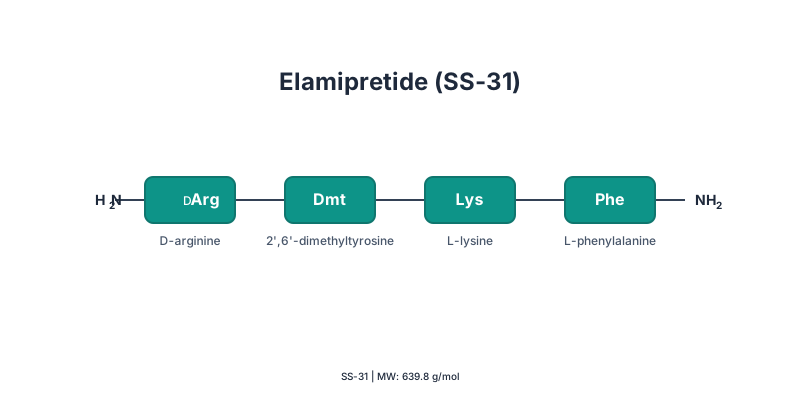
Sequence:
D-Arg-Dmt-Lys-Phe-NH2 Chemical Structure
Research Areas
- Age-related sarcopenia
- Ischemia-reperfusion injury
- Heart failure pathology
- Neurodegenerative disease models
- Primary mitochondrial myopathies
Potential Benefits
- Restores cellular ATP production
- Reverses age-related muscle decline
- Protects against ischemic tissue damage
- Prevents cardiolipin degradation
- Reduces localized mitochondrial oxidative stress
Research Dosing Guidelines
For research purposes only. Not for human consumption.
Typical Dose
2-4 mg
Frequency
Once daily
Duration
4-8 weeks
Administration
Subcutaneous injection
Let's be blunt—this is an expensive compound to research because the effective dose is measured in full milligrams, not micrograms. Most researchers run a 4-to-8 week protocol to evaluate mitochondrial recovery. Expect a sharp, noticeable sting at the injection site. This is universally reported and simply part of working with the compound.
Reconstitution Calculator
U-100 Insulin Syringe
0.1 units
2500 mcg/ml
0.0008 ml
0.1 IU
2500
For research and educational purposes only. Always follow proper reconstitution and sterile handling protocols.
Targeting Mitochondria: SS-31's Unique Mechanism
SS-31 is fundamentally different from other mitochondrial supplements because it physically integrates into the inner mitochondrial membrane rather than working through signaling pathways.
Mitochondrial Support Comparison
| Approach | Mechanism | Target | Evidence Level |
|---|---|---|---|
| SS-31 (Elamipretide) | Cardiolipin stabilization | Inner mitochondrial membrane | Phase II/III trials |
| CoQ10 | Electron transport chain support | Complex I-III | Moderate clinical |
| NAD+ precursors (NMN/NR) | Cofactor replenishment | Sirtuin activation | Early clinical |
| MOTS-c | AMPK activation | Metabolic gene expression | Animal studies |
| PQQ | Mitochondrial biogenesis | PGC-1α pathway | Limited clinical |
SS-31's structural approach addresses the root cause of age-related mitochondrial decline: cardiolipin degradation. When cardiolipin breaks down, the electron transport chain literally falls apart. No amount of CoQ10 or NAD+ can fix a structurally compromised membrane.
Potential Side Effects
- Injection site pain and redness (nearly universal)
- Mild transient headache
- Temporary lethargy upon initial dosing
Storage Requirements
Store lyophilized powder at -20°C. Once reconstituted, keep refrigerated at 2-8°C and use within 14 days.
Research References
- [1]First-in-class cardiolipin-protective compound as a therapeutic agent to restore mitochondrial bioenergetics (2014)Preclinical Population: Review of preclinical ischemia-reperfusion and aging models
SS-31 specifically binds to cardiolipin to protect mitochondrial structure and ATP production under extreme cellular stress.
Limitations: Primarily preclinical evidence; Phase II/III human trials ongoing
- [2]Mitochondrial-targeted peptide rapidly improves mitochondrial energetics and skeletal muscle performance in aged mice (2013)Emerging Evidence Population: Aged C57BL/6 mice (26-28 months old)
An 8-day protocol of SS-31 in aged mice rapidly reversed age-related declines in mitochondrial ATP production and improved muscle endurance.
Limitations: Aged mouse model; 8-day protocol may not reflect chronic human use
- [3]Reduction of ischemia/reperfusion injury with bendavia, a mitochondria-targeting cytoprotective peptide (2012)Emerging Evidence Population: Rabbit and rat cardiac ischemia-reperfusion models
Pre-treatment with SS-31 significantly reduced infarct size and protected cardiac tissue during simulated heart attacks.
Limitations: Animal ischemia model; human cardiac protection trials still in progress
Frequently Asked Questions
What is SS-31?
SS-31 (Elamipretide) is a synthetic tetrapeptide engineered to target and protect mitochondria. It was originally developed by researchers Hazel Szeto and Peter Schiller to directly address mitochondrial dysfunction at the structural level rather than through secondary signaling.
What are the potential research benefits of SS-31?
Animal and early clinical research shows SS-31 can restore ATP production and significantly reduce oxidative stress. We see particularly strong data around its ability to reverse age-related muscle decline (sarcopenia) and protect vital organs from ischemic damage.
How is SS-31 typically dosed in research?
Research protocols require unusually high dosages for a peptide, typically landing between 2 and 4 mg administered once daily via subcutaneous injection. Most experimental cycles span 4 to 8 weeks to allow adequate time for mitochondrial structural repair.
What are the side effects of SS-31?
The most universally reported side effect is a sharp, distinct stinging sensation at the injection site that lasts for several minutes. Other less frequent effects include mild headaches and temporary fatigue during the first week of a protocol.
How should SS-31 be stored?
Keep the lyophilized peptide in a freezer at -20°C for long-term stability. After reconstitution with bacteriostatic water, store the vial in the refrigerator at 2-8°C away from direct light.
Ready to Purchase SS-31?
Get the highest quality SS-31 from our recommended vendor with 99%+ purity guaranteed.
Buy at Simple PeptideRelated Topics
Therapeutic Applications of Peptides
Therapeutic peptides occupy the pharmacological space between small molecules and biologics, offering high selectivity for protein-protein interactions with lower immunogenicity.
Bioactive Peptides and Signaling Pathways
Bioactive peptides regulate physiology through GPCR and receptor tyrosine kinase signaling, functioning as hormones, neurotransmitters, and local mediators.
Safety & Reference
Related Peptides
Epithalon
Epithalon (Epitalon)
Epithalon is a synthetic tetrapeptide based on the natural peptide epithalamin, which is produced by the pineal gland. It has been extensively researched for its ability to activate telomerase and potentially extend lifespan in animal models.
Learn MoreHumanin
Humanin (HN)
Humanin isn't your standard synthetic chain. It's a mitochondrial-derived peptide (MDP) encoded directly in the 16S rRNA gene of your mitochondrial DNA. Japanese researchers stumbled on it in 2001 while analyzing surviving neurons in Alzheimer's brains. The fact that mitochondria pump out their own protective peptides to keep host cells alive under extreme stress is fascinating. Let's be real—the human data is still thin, but the rodent longevity and neuroprotection models are aggressive.
Learn MoreMOTS-C
Mitochondrial Open Reading Frame of the Twelve S rRNA-c
MOTS-c isn't your standard synthetic peptide concocted in a lab. It is a naturally occurring mitochondrial-derived peptide (MDP) discovered by USC researchers in 2015. The wild part is that it's encoded directly in the mitochondrial DNA rather than the cellular nucleus. The scientific community unofficially calls it the 'exercise mimetic' because it forces cells into a state of metabolic stress identical to high-intensity cardiovascular training.
Learn More