
MOTS-C
Mitochondrial Open Reading Frame of the Twelve S rRNA-c
MOTS-c isn't your standard synthetic peptide concocted in a lab. It is a naturally occurring mitochondrial-derived peptide (MDP) discovered by USC researchers in 2015. The wild part is that it's encoded directly in the mitochondrial DNA rather than the cellular nucleus. The scientific community unofficially calls it the 'exercise mimetic' because it forces cells into a state of metabolic stress identical to high-intensity cardiovascular training.
Purity
99%+
Molecular Weight
2174.6 g/mol
Administration
Subcutaneous injection (often pre-workout)
Storage
Store lyophilized powder at -20°C
Mechanism of Action
MOTS-c targets skeletal muscle and acts as a massive metabolic switch. It actively inhibits the folate cycle, which causes a spike in AICAR levels and subsequently triggers extreme AMPK activation. Once activated, MOTS-c physically translocates from the mitochondria directly into the cell nucleus to upregulate genes involved in glucose metabolism and fatty acid oxidation. You are effectively bypassing the central nervous system to force a cellular energy crisis that triggers adaptation.
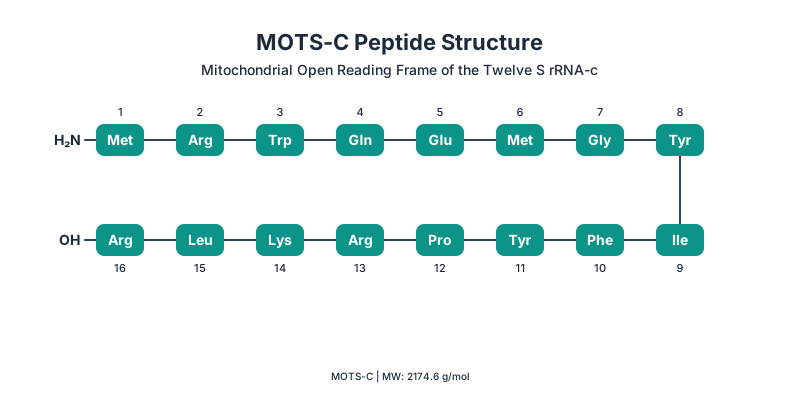
Sequence:
Met-Arg-Trp-Gln-Glu-Met-Gly-Tyr-Ile-Phe-Tyr-Pro-Arg-Lys-Leu-Arg Chemical Structure
Research Areas
- Skeletal muscle metabolism
- Age-related physical decline
- Diet-induced obesity models
- Insulin resistance and glucose clearance
- Mitochondrial dysfunction
Potential Benefits
- Massively increases AMPK activation
- Enhances cellular fatty acid oxidation
- Improves skeletal muscle insulin sensitivity
- Boosts physical endurance capacity
- Helps clear intracellular metabolic waste
Research Dosing Guidelines
For research purposes only. Not for human consumption.
Typical Dose
5-10 mg
Frequency
1-2 times per week
Duration
4-6 weeks
Administration
Subcutaneous injection (often pre-workout)
Most of the community lands on 10mg per week, split into two 5mg doses pinned on heavy training days. This peptide stings going in—that is normal. Because it aggressively drives glucose into muscle tissue, do not inject this while fasted unless you want to risk a rough hypoglycemic crash. For research purposes only.
Reconstitution Calculator
U-100 Insulin Syringe
0.2 units
2500 mcg/ml
0.0020 ml
0.2 IU
1000
For research and educational purposes only. Always follow proper reconstitution and sterile handling protocols.
MOTS-c as an Exercise Mimetic: What the Research Shows
MOTS-c earned the label "exercise mimetic" because it triggers the same AMPK-driven metabolic adaptations that high-intensity training produces — but through a completely different entry point.
MOTS-c vs Physical Exercise
| Factor | MOTS-c | High-Intensity Exercise |
|---|---|---|
| AMPK activation | Direct (via folate cycle inhibition) | Indirect (via ATP depletion) |
| Fat oxidation | Increased | Increased |
| Insulin sensitivity | Improved | Improved |
| Muscle building | Not observed | Yes (mechanical stimulus) |
| Cardiovascular fitness | Improved endurance capacity | Comprehensive CV adaptation |
| Bone density | Not studied | Improved with weight-bearing |
MOTS-c replicates the metabolic benefits of exercise but cannot replace the mechanical stimulus needed for muscle hypertrophy and bone remodeling. Researchers view it as a complement to training — particularly valuable for populations unable to exercise due to age or injury.
Potential Side Effects
- Intense burning or stinging at the injection site
- Transient hypoglycemia (especially if administered fasted)
- Increased appetite
- Mild muscle cramps during the first week
Storage Requirements
Store lyophilized powder at -20°C. Reconstituted solution must be kept at 2-8°C and used within 14 days, as it degrades faster than standard peptides.
Research References
- [1]The mitochondrial-derived peptide MOTS-c promotes metabolic homeostasis and reduces obesity and insulin resistance (Cell Metabolism, 2015) (2015)Emerging Evidence Population: C57BL/6J mice on high-fat diet
MOTS-c administration in mice prevented high-fat diet-induced obesity and reversed age-dependent insulin resistance.
Limitations: Mouse model; human metabolic responses to MOTS-c not yet characterized
- [2]MOTS-c is an exercise-induced mitochondrial-encoded regulator of age-dependent physical decline and muscle homeostasis (Nature Communications, 2021) (2021)Emerging Evidence Population: Aged C57BL/6N mice (16 months old)
Treatment with MOTS-c significantly improved physical capacity and lifespan in late-life mice.
Limitations: Late-life intervention in mice; translation to human aging uncertain
- [3]Mitochondrial-derived Peptides in Aging and Metabolic Diseases (Aging, 2019) (2019)Preclinical Population: Review of MDP biology across preclinical models
Summarizes how MOTS-c translocates to the nucleus to regulate metabolic gene expression during cellular stress.
Limitations: Narrative review; no human pharmacokinetic or safety data included
Frequently Asked Questions
What is MOTS-C?
MOTS-c isn't a traditional synthetic peptide, but a naturally occurring mitochondrial-derived peptide (MDP) encoded directly by mitochondrial DNA. Researchers discovered it in 2015 and quickly labeled it an 'exercise mimetic' because it forces cells into a state of metabolic stress. It essentially tricks your body into thinking it is doing high-intensity cardio.
What are the potential research benefits of MOTS-C?
The primary draw here is massive metabolic adaptation. Animal models show MOTS-c heavily activates AMPK, which translates to enhanced fatty acid oxidation, improved skeletal muscle insulin sensitivity, and increased endurance capacity. It forces the cellular machinery to clear out metabolic waste and operate more efficiently.
How is MOTS-C typically dosed in research?
Unlike most peptides that use microgram dosing, MOTS-c requires heavy milligram doses. The standard research protocol lands at 5-10 mg per week, usually split into two 5 mg subcutaneous injections prior to intense physical training. A typical research cycle runs 4 to 6 weeks.
What are the side effects of MOTS-C?
The most immediate side effect is a harsh, stinging sensation at the injection site—this peptide is notoriously spicy. Because it rapidly drives glucose into muscle tissue, administering it while fasted can trigger sudden hypoglycemia. Some subjects also report temporary muscle cramping during the first week of a cycle.
How should MOTS-C be stored?
Lyophilized powder needs to stay strictly at -20°C since this molecule is more fragile than standard peptides. Once reconstituted, keep it at 2-8°C and use it within 14 days before it degrades.
Ready to Purchase MOTS-C?
Get the highest quality MOTS-C from our recommended vendor with 99%+ purity guaranteed.
Buy at Simple PeptideRelated Topics
Biological Roles of Peptides in Humans
Peptides serve as crucial signaling molecules in the human body, functioning as hormones, neurotransmitters, and immunomodulators that regulate virtually every physiological process.
Bioactive Peptides and Signaling Pathways
Bioactive peptides regulate physiology through GPCR and receptor tyrosine kinase signaling, functioning as hormones, neurotransmitters, and local mediators.
Safety & Reference
Related Peptides
5-Amino-1MQ
5-Amino-1-Methylquinolinium
Let's clear something up right away: 5-Amino-1MQ isn't actually a peptide. It's a membrane-permeable small molecule that gets lumped into the peptide conversation because of how researchers and biohackers use it. Discovered by researchers at the University of Texas, it's a highly selective NNMT inhibitor that flips the metabolic switch in fat cells. Instead of acting like a crude central nervous system stimulant, it directly targets cellular energy machinery to shrink white adipose tissue.
Learn MoreHumanin
Humanin (HN)
Humanin isn't your standard synthetic chain. It's a mitochondrial-derived peptide (MDP) encoded directly in the 16S rRNA gene of your mitochondrial DNA. Japanese researchers stumbled on it in 2001 while analyzing surviving neurons in Alzheimer's brains. The fact that mitochondria pump out their own protective peptides to keep host cells alive under extreme stress is fascinating. Let's be real—the human data is still thin, but the rodent longevity and neuroprotection models are aggressive.
Learn MoreSS-31
Elamipretide (SS-31)
SS-31, clinically known as Elamipretide, forces us to rethink how we handle cellular aging. Discovered by researchers Hazel Szeto and Peter Schiller (hence the 'SS' designation), this tetrapeptide physically localizes to the inner mitochondrial membrane. Most longevity compounds try to boost mitochondrial function indirectly through signaling pathways. SS-31 ignores the middleman and acts as a targeted structural reinforcement exactly where the cell generates energy.
Learn More