Dihexa
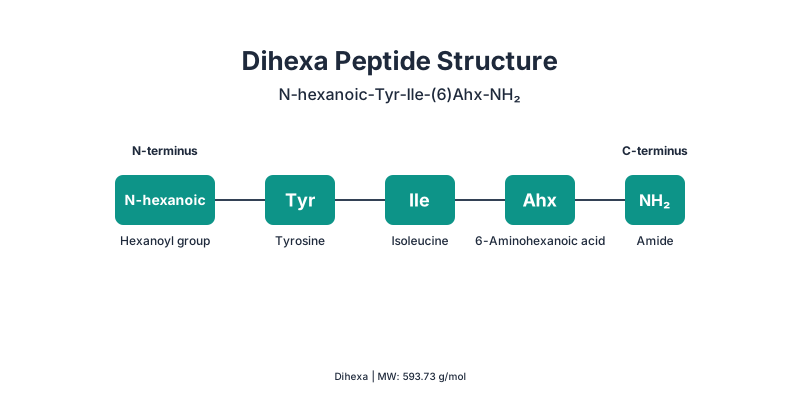
N-hexanoic-Tyr-Ile-(6) aminohexanoic amide
Dihexa is a potent oligopeptide derived from angiotensin IV that has demonstrated remarkable cognitive-enhancing and neuroprotective properties. Originally developed at Washington State University, it is considered up to ten million times more potent than BDNF at forming new neural connections in research models.
Purity
99%+
Molecular Weight
593.73 g/mol
Administration
Subcutaneous injection or oral (limited bioavailability)
Storage
Store at -20°C lyophilized
Mechanism of Action
Dihexa acts primarily through activation of hepatocyte growth factor (HGF) and its receptor c-Met, which plays a critical role in synaptogenesis. It facilitates the formation of new synaptic connections and promotes dendritic spine growth. Additionally, it enhances the activity of the HGF/c-Met pathway, which is involved in neuronal survival, synaptic plasticity, and memory consolidation.
Sequence:
N-hexanoic-Tyr-Ile-(6)Ahx-NH2 Chemical Structure
Research Areas
- Synaptogenesis and new synapse formation
- Alzheimer's disease and neurodegeneration
- Cognitive decline and age-related memory loss
- Traumatic brain injury recovery
- HGF/c-Met signaling pathway
Potential Benefits
- Potent synaptogenesis promotion
- Enhanced memory consolidation
- Improved cognitive function
- Neuroprotective effects
- Support for age-related cognitive decline
Research Dosing Guidelines
For research purposes only. Not for human consumption.
Typical Dose
5-20 mg
Frequency
Once daily
Duration
4-8 weeks
Administration
Subcutaneous injection or oral (limited bioavailability)
Extremely potent compound. Start at the lowest effective dose. Research-use only with very limited human data available.
Reconstitution Calculator
U-100 Insulin Syringe
0.2 units
2500 mcg/ml
0.0020 ml
0.2 IU
1000
For research and educational purposes only. Always follow proper reconstitution and sterile handling protocols.
Nootropic Peptide Potency Comparison
Dihexa occupies a unique position in the nootropic peptide landscape due to its extraordinary potency at driving new synapse formation.
Nootropic Peptide Comparison
| Factor | Dihexa | Semax | Selank |
|---|---|---|---|
| Primary mechanism | HGF/c-Met synaptogenesis | BDNF upregulation | Enkephalin stabilization |
| Potency | Extremely high (10M× BDNF) | Moderate | Moderate |
| Effect type | Structural (new synapses) | Neurochemical (plasticity) | Neurochemical (anxiolysis) |
| Human data | None | Limited (Russian clinics) | Limited (Russian clinics) |
| Administration | SubQ or oral | Intranasal | Intranasal |
| Risk profile | Unknown (no human trials) | Well-tolerated | Well-tolerated |
Dihexa's synaptogenic potency is unmatched, but this comes with the significant caveat of having zero human clinical data. Semax and Selank offer more established safety profiles for cognitive research.
Potential Side Effects
- Very limited human safety data
- Headache (reported anecdotally)
- Potential overstimulation at high doses
- Injection site reactions
Storage Requirements
Store at -20°C lyophilized. Reconstituted solution at 2-8°C.
Research References
- [1]Dihexa and Cognitive Enhancement via HGF/c-Met (2012)Emerging Evidence Population: Aged Fischer 344 rats and scopolamine-impaired young rats
Dihexa restored cognitive function in aged and scopolamine-impaired rats through HGF/c-Met-mediated synaptogenesis.
Limitations: Animal behavioral model; no human safety or efficacy data
- [2]Angiotensin IV Analog Dihexa Promotes Synaptogenesis (2014)Emerging Evidence Population: Hippocampal neuronal cultures and aged rat models
Dihexa drove new synapse formation and dendritic spine growth via direct activation of the HGF/c-Met signaling axis.
Limitations: Combined in-vitro/animal data; extremely limited translational evidence
Frequently Asked Questions
What is Dihexa?
Dihexa is a potent oligopeptide derived from angiotensin IV, originally developed at Washington State University, that has demonstrated remarkable cognitive-enhancing and neuroprotective properties. It is considered up to ten million times more potent than BDNF at forming new neural connections in research models.
What are the potential research benefits of Dihexa?
Research suggests Dihexa may potently promote synaptogenesis, enhance memory consolidation, improve cognitive function, and provide neuroprotective effects. It acts primarily through activation of hepatocyte growth factor (HGF) and its receptor c-Met, facilitating the formation of new synaptic connections.
How is Dihexa typically dosed in research?
Dihexa is typically administered at 5-20 mg once daily via subcutaneous injection or oral administration with limited bioavailability. It is an extremely potent compound, so starting at the lowest effective dose is recommended, with research cycles lasting 4-8 weeks.
What are the side effects of Dihexa?
Very limited human safety data exists for Dihexa. Anecdotally reported side effects include headache, potential overstimulation at high doses, and injection site reactions. Caution is warranted given the limited clinical data available.
How should Dihexa be stored?
Dihexa should be stored at -20°C in lyophilized form for long-term preservation. Once reconstituted, the solution should be refrigerated at 2-8°C and used within the recommended timeframe.
Ready to Purchase Dihexa?
Get the highest quality Dihexa from our recommended vendor with 99%+ purity guaranteed.
Buy at Simple PeptideRelated Topics
Bioactive Peptides and Signaling Pathways
Bioactive peptides regulate physiology through GPCR and receptor tyrosine kinase signaling, functioning as hormones, neurotransmitters, and local mediators.
Neuropeptides vs. Peptide Hormones
Cells build both neuropeptides and peptide hormones through shared biosynthetic pathways. That common origin is where the similarity ends. The two classes split at the point of release. Neuropeptides act through neural signaling, reaching targets near the neurons that produce them. Peptide hormones follow endocrine signaling instead, traveling to distant sites in the body. Release location, target range, and signaling mode create the practical split between two peptide classes that otherwise share a biological starting point.
Safety & Reference
Related Peptides
BPC-157
Body Protection Compound-157
BPC-157 is a pentadecapeptide composed of 15 amino acids. It is a partial sequence of body protection compound (BPC) that is discovered in and isolated from human gastric juice. Research has shown it accelerates the healing of many different wounds, including tendon-to-bone healing and superior healing of damaged ligaments.
Learn MoreSemax
Semax (ACTH 4-10)
Semax is a synthetic peptide derived from a fragment of adrenocorticotropic hormone (ACTH). Developed in Russia, it has been extensively studied for its neuroprotective and cognitive-enhancing properties. It is used clinically in Russia for stroke and cognitive disorders.
Learn MoreSelank
Selank Peptide
Selank is a synthetic peptide with anxiolytic and nootropic properties, developed in Russia as a derivative of tuftsin. It has been studied for its ability to reduce anxiety without sedation and improve cognitive function.
Learn More