Semax
Semax (ACTH 4-10)
Semax is a synthetic peptide derived from a fragment of adrenocorticotropic hormone (ACTH). Developed in Russia, it has been extensively studied for its neuroprotective and cognitive-enhancing properties. It is used clinically in Russia for stroke and cognitive disorders.
Purity
99%+
Molecular Weight
813.93 g/mol
Administration
Intranasal spray (most common) or subcutaneous
Storage
Store at 2-8°C
Mechanism of Action
Semax increases brain-derived neurotrophic factor (BDNF) and modulates dopamine, serotonin, and acetylcholine systems. It also affects the expression of genes related to neuroplasticity and has anti-inflammatory effects in the central nervous system.
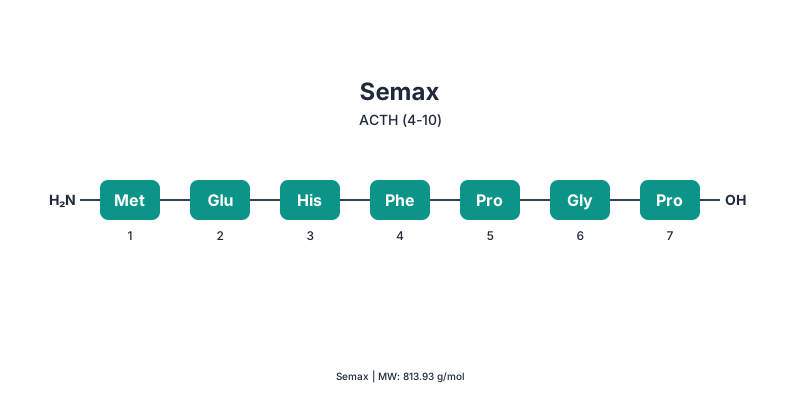
Sequence:
Met-Glu-His-Phe-Pro-Gly-Pro Chemical Structure
Research Areas
- Cognitive enhancement
- Stroke recovery
- ADHD research
- Depression
- Neuroprotection
Potential Benefits
- Enhanced memory and learning
- Improved focus
- Neuroprotection
- Reduced anxiety
- Better mental clarity
Research Dosing Guidelines
For research purposes only. Not for human consumption.
Typical Dose
100-600 mcg
Frequency
2-3 times daily
Duration
10-20 days, with breaks
Administration
Intranasal spray (most common) or subcutaneous
Typically administered as nasal drops or spray. Cycles of 10-20 days with equal breaks.
Reconstitution Calculator
U-100 Insulin Syringe
4.0 units
2500 mcg/ml
0.040 ml
4.0 IU
50
For research and educational purposes only. Always follow proper reconstitution and sterile handling protocols.
Semax vs Selank: Choosing the Right Nootropic Peptide
Semax and Selank are both Russian-developed intranasal peptides with nootropic properties, but they target different aspects of cognitive performance.
Head-to-Head Comparison
| Factor | Semax | Selank |
|---|---|---|
| Primary effect | Cognitive enhancement, focus | Anxiolytic, stress resilience |
| Derived from | ACTH (4-10) fragment | Tuftsin (immune peptide) |
| Key pathway | BDNF upregulation, dopamine modulation | Serotonin metabolism, enkephalin stabilization |
| Best for | Studying, work performance, creativity | Social anxiety, stress, mood regulation |
| Stimulating? | Mildly stimulating | Calming without sedation |
| Immune effects | Minimal | Significant immunomodulation |
Many researchers stack both peptides for a balanced cognitive protocol — Semax for mental sharpness and Selank for calm focus. The intranasal route makes both convenient to administer simultaneously.
Potential Side Effects
- Nasal irritation
- Headache (rare)
- Dizziness (rare)
Storage Requirements
Store at 2-8°C. Nasal solution stable for 1-2 weeks at room temperature.
Research References
- [1]Semax, an ACTH(4-10) Analogue with Nootropic Properties (2006)Preclinical Population: Preclinical models and Russian clinical studies
Semax demonstrated significant nootropic activity including improved memory consolidation and attention in both healthy subjects and stroke patients.
Limitations: Most clinical data from Russian journals with limited peer review in Western literature
- [2]Semax Increases BDNF Protein in Rat Basal Forebrain (2006)Emerging Evidence Population: Adult Wistar rats
Intranasal Semax administration significantly increased BDNF protein levels in the rat basal forebrain and hippocampus.
Limitations: Single animal species; short observation window
- [3]Neurotrophin Gene Expression Under Semax Action (2007)Emerging Evidence Population: Wistar rats with focal cerebral ischemia
Semax upregulated expression of BDNF and NGF genes in the hippocampus and frontal cortex of rats.
Limitations: Ischemia model may not reflect healthy cognitive enhancement
Frequently Asked Questions
What is Semax?
Semax is a synthetic peptide derived from a fragment of adrenocorticotropic hormone (ACTH 4-10), developed in Russia and extensively studied for its neuroprotective and cognitive-enhancing properties. It is used clinically in Russia for stroke recovery and cognitive disorders.
What are the potential research benefits of Semax?
Research suggests Semax may enhance memory and learning, improve focus and mental clarity, provide neuroprotection, and reduce anxiety. It achieves these effects by increasing brain-derived neurotrophic factor (BDNF) and modulating dopamine, serotonin, and acetylcholine systems.
How is Semax typically dosed in research?
Semax is typically administered at 100-600 mcg two to three times daily, most commonly via intranasal spray. Research cycles of 10-20 days with equal breaks between cycles are generally recommended.
What are the side effects of Semax?
Semax is generally well tolerated with minimal side effects. Rare adverse effects may include nasal irritation from intranasal administration, mild headache, and occasional dizziness.
How should Semax be stored?
Semax should be stored at 2-8°C for optimal preservation. The nasal solution form is stable for one to two weeks at room temperature, making it convenient for daily research use.
Ready to Purchase Semax?
Get the highest quality Semax from our recommended vendor with 99%+ purity guaranteed.
Buy at Simple PeptideRelated Topics
Bioactive Peptides and Signaling Pathways
Bioactive peptides regulate physiology through GPCR and receptor tyrosine kinase signaling, functioning as hormones, neurotransmitters, and local mediators.
Neuropeptides vs. Peptide Hormones
Cells build both neuropeptides and peptide hormones through shared biosynthetic pathways. That common origin is where the similarity ends. The two classes split at the point of release. Neuropeptides act through neural signaling, reaching targets near the neurons that produce them. Peptide hormones follow endocrine signaling instead, traveling to distant sites in the body. Release location, target range, and signaling mode create the practical split between two peptide classes that otherwise share a biological starting point.
Safety & Reference
Related Peptides
Selank
Selank Peptide
Selank is a synthetic peptide with anxiolytic and nootropic properties, developed in Russia as a derivative of tuftsin. It has been studied for its ability to reduce anxiety without sedation and improve cognitive function.
Learn MoreDihexa
N-hexanoic-Tyr-Ile-(6) aminohexanoic amide
Dihexa is a potent oligopeptide derived from angiotensin IV that has demonstrated remarkable cognitive-enhancing and neuroprotective properties. Originally developed at Washington State University, it is considered up to ten million times more potent than BDNF at forming new neural connections in research models.
Learn More