TB-500
Thymosin Beta-4
TB-500 is a synthetic version of the naturally occurring peptide Thymosin Beta-4. It plays a crucial role in tissue repair, regeneration, and protection. TB-500 is known for its ability to promote healing, reduce inflammation, and improve flexibility.
Purity
99%+
Molecular Weight
4963.5 g/mol
Administration
Subcutaneous or intramuscular injection
Storage
Store lyophilized powder at -20°C
Mechanism of Action
TB-500 upregulates cell-building proteins such as actin, which is involved in cell migration and proliferation. It promotes angiogenesis, reduces inflammation, and helps with tissue remodeling. It also has anti-inflammatory properties through modulation of cytokine expression.
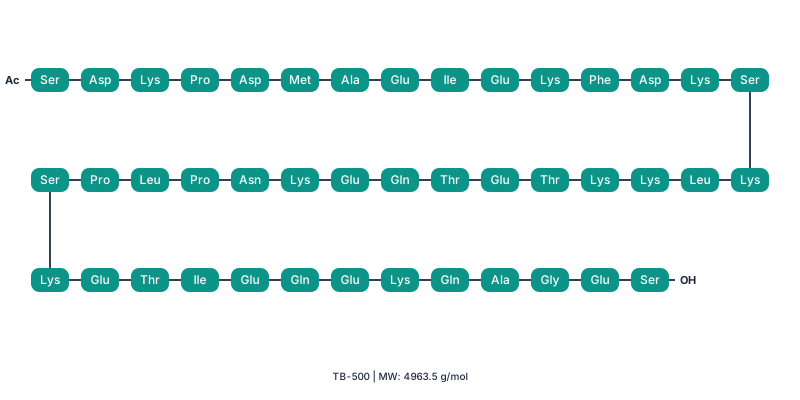
Sequence:
SDKPDMAEIEKFDKSKLKKTETQEKNPLPSKETIEQEKQAGES Chemical Structure
Research Areas
- Cardiac repair
- Wound healing
- Hair regrowth
- Muscle repair
- Corneal repair
Potential Benefits
- Enhanced tissue repair
- Reduced inflammation
- Improved flexibility
- Accelerated recovery
- Cardiovascular support
Research Dosing Guidelines
For research purposes only. Not for human consumption.
Typical Dose
2-2.5 mg
Frequency
2 times per week (loading), weekly (maintenance)
Duration
4-8 weeks
Administration
Subcutaneous or intramuscular injection
Often used in conjunction with BPC-157 for synergistic effects in research settings.
Reconstitution Calculator
U-100 Insulin Syringe
0.1 units
2500 mcg/ml
0.0008 ml
0.1 IU
2500
For research and educational purposes only. Always follow proper reconstitution and sterile handling protocols.
TB-500 vs BPC-157: Choosing the Right Healing Peptide
TB-500 and BPC-157 are frequently compared as the two leading tissue-repair peptides. While they share a healing focus, their mechanisms and ideal use cases differ substantially.
Head-to-Head Comparison
| Factor | TB-500 | BPC-157 |
|---|---|---|
| Mechanism | Upregulates actin for cell migration | Promotes angiogenesis and NO synthesis |
| Best for | Muscle tears, cardiac repair, flexibility | Tendon/ligament injuries, gut healing |
| Systemic reach | Highly systemic | More localized when injected near site |
| Dosing frequency | 2x/week | 1-2x/day |
| Typical dose | 2-2.5 mg | 250-500 mcg |
| Stacking | Commonly stacked with BPC-157 | Commonly stacked with TB-500 |
Many researchers run both peptides simultaneously for synergistic healing effects. TB-500 provides broad, systemic tissue repair while BPC-157 targets specific injury sites with more localized action.
Potential Side Effects
- Head rush or lethargy (temporary)
- Injection site irritation
- Flu-like symptoms (rare)
Storage Requirements
Store lyophilized powder at -20°C. Reconstituted solution at 2-8°C for up to 2 weeks.
Research References
- [1]Thymosin β4 and Tissue Repair (2012)Preclinical Population: Preclinical models and clinical wound studies
Thymosin beta-4 promotes wound healing through upregulation of actin, angiogenesis, and anti-inflammatory activity.
Limitations: Limited controlled human trial data
- [2]Thymosin Beta-4: Actin-Sequestering Protein in Tissue Repair (2005)Preclinical Population: In-vitro cell models
Established thymosin beta-4 as the primary intracellular actin-sequestering protein critical for cell migration and tissue repair.
Limitations: Mechanistic review; indirect clinical applicability
- [3]Advances in Basic and Clinical Applications of Thymosin β4 (2015)Preclinical Population: Multiple preclinical and early clinical models
Demonstrated therapeutic potential of thymosin beta-4 across cardiac repair, dermal wound healing, and corneal regeneration.
Limitations: Heterogeneous study designs; lacks Phase III trial data
Frequently Asked Questions
What is TB-500?
TB-500 is a synthetic version of the naturally occurring peptide Thymosin Beta-4, which plays a crucial role in tissue repair, regeneration, and protection. It is widely studied for its ability to promote healing, reduce inflammation, and improve flexibility in research models.
What are the potential research benefits of TB-500?
Research indicates TB-500 may enhance tissue repair, reduce inflammation, improve flexibility, and support cardiovascular health. It promotes angiogenesis and cell migration through upregulation of actin, a key cell-building protein involved in proliferation.
How is TB-500 typically dosed in research?
TB-500 is typically dosed at 2-2.5 mg via subcutaneous or intramuscular injection, administered twice weekly during a loading phase and weekly for maintenance. Research cycles generally last 4-8 weeks, and it is often combined with BPC-157 for synergistic effects.
What are the side effects of TB-500?
TB-500 may cause temporary head rush or lethargy, injection site irritation, and rarely flu-like symptoms. Overall, it is considered well-tolerated in research settings with a favorable safety profile.
How should TB-500 be stored?
TB-500 should be stored as lyophilized powder at -20°C for long-term preservation. Once reconstituted, the solution should be kept at 2-8°C and used within two weeks.
Ready to Purchase TB-500?
Get the highest quality TB-500 from our recommended vendor with 99%+ purity guaranteed.
Buy at Simple PeptideRelated Topics
Biological Roles of Peptides in Humans
Peptides serve as crucial signaling molecules in the human body, functioning as hormones, neurotransmitters, and immunomodulators that regulate virtually every physiological process.
Therapeutic Applications of Peptides
Therapeutic peptides occupy the pharmacological space between small molecules and biologics, offering high selectivity for protein-protein interactions with lower immunogenicity.
Safety & Reference
Related Peptides
BPC-157
Body Protection Compound-157
BPC-157 is a pentadecapeptide composed of 15 amino acids. It is a partial sequence of body protection compound (BPC) that is discovered in and isolated from human gastric juice. Research has shown it accelerates the healing of many different wounds, including tendon-to-bone healing and superior healing of damaged ligaments.
Learn MoreGHK-Cu
Copper Peptide GHK-Cu
GHK-Cu is a naturally occurring copper complex of the tripeptide glycyl-L-histidyl-L-lysine. It has extensive research supporting its role in wound healing, skin regeneration, and anti-aging effects. GHK-Cu levels decline with age, which has led to interest in supplementation.
Learn More