LL-37
Cathelicidin Antimicrobial Peptide LL-37
LL-37 is the only cathelicidin-derived antimicrobial peptide found in humans. It is a 37-amino-acid peptide cleaved from the C-terminal end of the human cathelicidin protein hCAP18. LL-37 plays a central role in innate immune defense against bacterial, viral, and fungal infections.
Purity
99%+
Molecular Weight
4493.33 g/mol
Administration
Subcutaneous injection or topical application
Storage
Store at -20°C lyophilized
Mechanism of Action
LL-37 disrupts microbial membranes through electrostatic interactions with negatively charged lipid bilayers. Beyond direct antimicrobial activity, it modulates the immune response by promoting chemotaxis of immune cells, stimulating angiogenesis, enhancing wound healing, and modulating inflammatory cytokine production. It can also neutralize bacterial endotoxins (LPS).
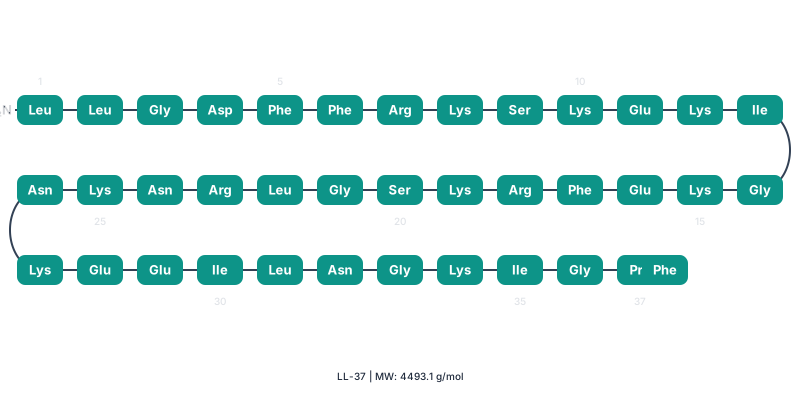
Sequence:
LLGDFFRKSKEKIGKEFKRIVQRIKDFLRNLVPRTES Chemical Structure
Research Areas
- Antimicrobial defense and innate immunity
- Wound healing and tissue repair
- Biofilm disruption
- Anti-inflammatory modulation
- Cancer immunotherapy adjuncts
Potential Benefits
- Broad-spectrum antimicrobial activity
- Enhanced innate immune response
- Accelerated wound healing
- Biofilm disruption capability
- Immune modulation and LPS neutralization
Research Dosing Guidelines
For research purposes only. Not for human consumption.
Typical Dose
50-100 mcg
Frequency
As needed or 2-3 times weekly
Duration
Variable based on research protocol
Administration
Subcutaneous injection or topical application
Dosing protocols are not well established. Research peptide with limited human dosing data. Use only under medical supervision.
Reconstitution Calculator
U-100 Insulin Syringe
2.0 units
2500 mcg/ml
0.020 ml
2.0 IU
100
For research and educational purposes only. Always follow proper reconstitution and sterile handling protocols.
LL-37 Antimicrobial Spectrum
LL-37 provides remarkably broad antimicrobial coverage compared to conventional antibiotics, acting through membrane disruption rather than metabolic targets.
Antimicrobial Activity
| Pathogen Type | Activity Level | Mechanism |
|---|---|---|
| Gram-positive bacteria | Strong | Membrane disruption and pore formation |
| Gram-negative bacteria | Strong | LPS binding and outer membrane destabilization |
| Biofilm-forming bacteria | Moderate-Strong | Biofilm matrix disruption and penetration |
| Fungi (Candida) | Moderate | Fungal membrane disruption |
| Enveloped viruses | Moderate | Viral envelope disruption |
| Mycobacteria | Limited | Intracellular killing via autophagy promotion |
LL-37's membrane-targeting mechanism makes resistance development unlikely compared to conventional antibiotics. Its ability to disrupt established biofilms adds particular clinical interest for chronic wound and implant-associated infections.
Potential Side Effects
- Injection site irritation
- Local inflammatory response at high doses
- Limited human safety data for systemic use
- Potential mast cell activation at high concentrations
Storage Requirements
Store at -20°C lyophilized. Reconstituted at 2-8°C. Avoid repeated freeze-thaw cycles.
Research References
- [1]LL-37: The Only Human Member of the Cathelicidin Family (2003)Preclinical Population: In-vitro microbial culture studies
LL-37 demonstrates broad-spectrum antimicrobial activity against bacteria, fungi, and enveloped viruses through membrane disruption.
Limitations: In-vitro antimicrobial efficacy may not translate to systemic clinical use
- [2]Antimicrobial Peptides in Human Health and Disease (2006)Preclinical Population: Comprehensive review of human antimicrobial peptide biology
Antimicrobial peptides including LL-37 serve dual roles as direct pathogen killers and immune system modulators.
Limitations: Broad review; specific therapeutic dosing for LL-37 not addressed
Frequently Asked Questions
What is LL-37?
LL-37 is the only cathelicidin-derived antimicrobial peptide found in humans, consisting of 37 amino acids cleaved from the human cathelicidin protein hCAP18. It plays a central role in innate immune defense against bacterial, viral, and fungal infections.
What are the potential research benefits of LL-37?
Research indicates LL-37 provides broad-spectrum antimicrobial activity, enhances innate immune response, accelerates wound healing, and can disrupt bacterial biofilms. It also demonstrates immune modulation capabilities including neutralization of bacterial endotoxins (LPS).
How is LL-37 typically dosed in research?
LL-37 is typically administered at 50-100 mcg via subcutaneous injection or topical application, two to three times weekly as needed. Dosing protocols are not yet well established, and research use requires careful protocol design given limited human dosing data.
What are the side effects of LL-37?
Potential side effects of LL-37 include injection site irritation, local inflammatory response at high doses, and potential mast cell activation at high concentrations. Limited human safety data exists for systemic use of this antimicrobial peptide.
How should LL-37 be stored?
LL-37 should be stored at -20°C in lyophilized form and refrigerated at 2-8°C once reconstituted. Repeated freeze-thaw cycles should be avoided to maintain the peptide's antimicrobial activity and structural integrity.
Ready to Purchase LL-37?
Get the highest quality LL-37 from our recommended vendor with 99%+ purity guaranteed.
Buy at Simple PeptideRelated Topics
Antimicrobial Peptides and Host Defense
AMPs are evolutionarily ancient components of innate immunity, typically 12-50 amino acids, that kill pathogens through membrane disruption and serve as immunomodulators.
Amphipathic Helices in Antimicrobial Peptides
Amphipathic α-helices, with segregated hydrophobic and cationic faces, are the key structural feature enabling antimicrobial peptides to selectively disrupt bacterial membranes.
Safety & Reference
Related Peptides
BPC-157
Body Protection Compound-157
BPC-157 is a pentadecapeptide composed of 15 amino acids. It is a partial sequence of body protection compound (BPC) that is discovered in and isolated from human gastric juice. Research has shown it accelerates the healing of many different wounds, including tendon-to-bone healing and superior healing of damaged ligaments.
Learn MoreThymosin Alpha-1
Thymosin Alpha-1
Thymosin Alpha-1 is a peptide naturally produced by the thymus gland. It plays a crucial role in immune system regulation and has been approved in many countries for treatment of hepatitis B and C, and as an adjunct to cancer therapy.
Learn More