DSIP
Delta Sleep-Inducing Peptide
DSIP is a neuropeptide that was first isolated from rabbit brain tissue. It has been studied for its ability to promote delta wave sleep (deep sleep) and for its stress-protective and pain-modulating effects.
Purity
99%+
Molecular Weight
848.81 g/mol
Administration
Subcutaneous
Storage
Store at -20°C
Mechanism of Action
DSIP modulates sleep architecture by promoting delta wave sleep without affecting REM sleep. It also influences cortisol, LH, and GH secretion, and has been shown to normalize disrupted circadian rhythms and stress responses.
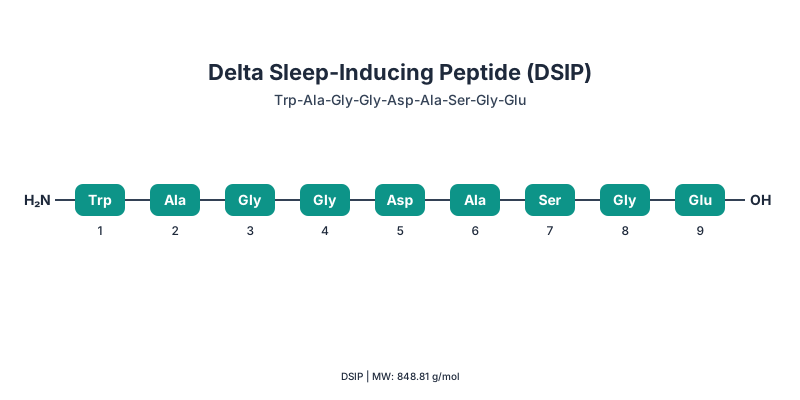
Sequence:
Trp-Ala-Gly-Gly-Asp-Ala-Ser-Gly-Glu Chemical Structure
Research Areas
- Sleep disorders
- Chronic pain
- Stress adaptation
- Circadian rhythm disorders
- Opioid withdrawal
Potential Benefits
- Improved sleep quality
- Enhanced deep sleep
- Stress reduction
- Pain modulation
- Normalized sleep patterns
Research Dosing Guidelines
For research purposes only. Not for human consumption.
Typical Dose
100-300 mcg
Frequency
Once daily before bed
Duration
5-10 days
Administration
Subcutaneous, intramuscular, or intranasal
Administer 30-60 minutes before intended sleep. Short cycles recommended.
Reconstitution Calculator
U-100 Insulin Syringe
4.0 units
2500 mcg/ml
0.040 ml
4.0 IU
50
For research and educational purposes only. Always follow proper reconstitution and sterile handling protocols.
DSIP and Sleep Architecture: What Research Shows
Unlike sedative medications that suppress consciousness, DSIP specifically targets the architecture of natural sleep by promoting delta wave (Stage 3-4 NREM) activity.
Sleep Agent Comparison
| Factor | DSIP | Benzodiazepines | Melatonin |
|---|---|---|---|
| Target | Delta wave promotion | GABA receptor agonism | Circadian rhythm reset |
| Deep sleep effect | Enhanced | Suppressed | Minimal direct effect |
| REM impact | Preserved | Suppressed | Preserved |
| Morning grogginess | Minimal | Significant | Minimal |
| Dependency risk | Not observed | High | Low |
| Stress modulation | Yes (cortisol normalization) | Yes (GABA-mediated) | Indirect |
DSIP's unique ability to enhance deep sleep without suppressing REM or causing dependency makes it a compelling research target for sleep quality optimization.
Potential Side Effects
- Drowsiness
- Headache (rare)
- Generally well tolerated
Storage Requirements
Store at -20°C. Very fragile - handle with care.
Research References
- [1]Delta Sleep-Inducing Peptide (DSIP) (1988)Preclinical Population: Human sleep studies and animal EEG models
DSIP promoted delta wave sleep onset and duration without suppressing REM sleep or causing morning sedation.
Limitations: Older research methodology; inconsistent results across replication attempts
- [2]Characterization and Properties of DSIP (1984)Preclinical Population: Rabbit brain tissue isolation and rodent models
Characterized DSIP as a stress-protective factor that normalizes disrupted circadian rhythms and modulates endocrine function.
Limitations: Early characterization study; mechanism of action not fully elucidated
Frequently Asked Questions
What is DSIP?
DSIP (Delta Sleep-Inducing Peptide) is a neuropeptide first isolated from rabbit brain tissue that promotes delta wave sleep, also known as deep sleep. It has been studied for its stress-protective, pain-modulating, and sleep-regulating properties.
What are the potential research benefits of DSIP?
Research suggests DSIP may improve sleep quality by promoting deep delta wave sleep without affecting REM sleep, reduce stress responses, and modulate pain perception. It also shows potential for normalizing disrupted circadian rhythms and influencing cortisol and growth hormone secretion.
How is DSIP typically dosed in research?
DSIP is typically administered at 100-300 mcg once daily, 30-60 minutes before intended sleep via subcutaneous, intramuscular, or intranasal routes. Research cycles are generally short at 5-10 days.
What are the side effects of DSIP?
DSIP is generally well tolerated in research settings. The most common effect is expected drowsiness, with rare reports of headache. Its favorable side effect profile makes it suitable for sleep-related research.
How should DSIP be stored?
DSIP should be stored at -20°C and handled with care as it is considered a fragile peptide. Special attention should be given to avoiding temperature fluctuations that could degrade its biological activity.
Ready to Purchase DSIP?
Get the highest quality DSIP from our recommended vendor with 99%+ purity guaranteed.
Buy at Simple PeptideRelated Topics
Bioactive Peptides and Signaling Pathways
Bioactive peptides regulate physiology through GPCR and receptor tyrosine kinase signaling, functioning as hormones, neurotransmitters, and local mediators.
Neuropeptides vs. Peptide Hormones
Cells build both neuropeptides and peptide hormones through shared biosynthetic pathways. That common origin is where the similarity ends. The two classes split at the point of release. Neuropeptides act through neural signaling, reaching targets near the neurons that produce them. Peptide hormones follow endocrine signaling instead, traveling to distant sites in the body. Release location, target range, and signaling mode create the practical split between two peptide classes that otherwise share a biological starting point.
Safety & Reference
Related Peptides
Semax
Semax (ACTH 4-10)
Semax is a synthetic peptide derived from a fragment of adrenocorticotropic hormone (ACTH). Developed in Russia, it has been extensively studied for its neuroprotective and cognitive-enhancing properties. It is used clinically in Russia for stroke and cognitive disorders.
Learn MoreSelank
Selank Peptide
Selank is a synthetic peptide with anxiolytic and nootropic properties, developed in Russia as a derivative of tuftsin. It has been studied for its ability to reduce anxiety without sedation and improve cognitive function.
Learn More