CJC-1295
CJC-1295 (with or without DAC)
CJC-1295 is a synthetic 29-amino-acid analog of growth hormone-releasing hormone (GHRH), originally developed by ConjuChem Biotechnologies. It stimulates the pituitary gland to release growth hormone in a dose-dependent manner. It comes in two forms: with DAC (Drug Affinity Complex), which uses a maleimidopropionic acid linker to bind the peptide to serum albumin and extend its half-life to roughly 8 days, and without DAC (also called Mod GRF 1-29), which has a half-life of about 30 minutes and produces sharper, more natural GH pulses.
Purity
99%+
Molecular Weight
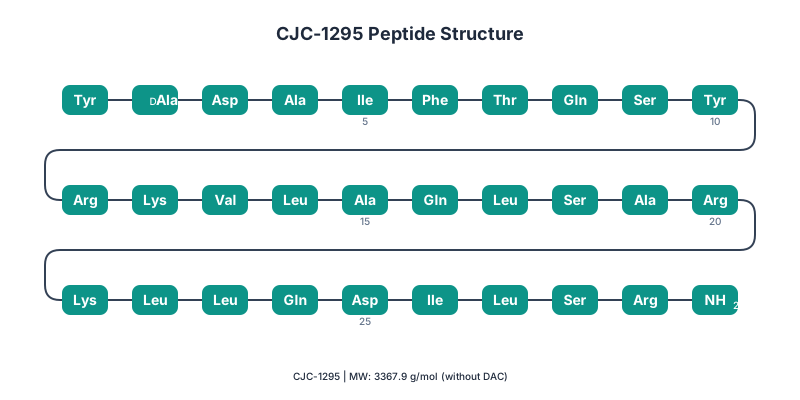
3367.9 g/mol (without DAC)
Administration
Subcutaneous injection
Storage
Store at -20°C lyophilized
Mechanism of Action
CJC-1295 binds to GHRH receptors (GHRH-R) on somatotroph cells in the anterior pituitary gland, triggering the production and pulsatile release of growth hormone. The DAC modification — a reactive chemical group that covalently attaches to circulating serum albumin after injection — prevents enzymatic degradation and renal clearance, extending the peptide's half-life from approximately 30 minutes to 8 days. Without DAC, the peptide is cleared rapidly, producing a GH spike that more closely mimics the body's natural pulsatile secretion pattern. Both forms increase IGF-1 levels downstream.
Sequence:
Tyr-D-Ala-Asp-Ala-Ile-Phe-Thr-Gln-Ser-Tyr-Arg-Lys-Val-Leu-Ala-Gln-Leu-Ser-Ala-Arg-Lys-Leu-Leu-Gln-Asp-Ile-Leu-Ser-Arg-NH2 Chemical Structure
Research Areas
- Growth hormone deficiency
- Body composition
- Metabolic function
- Anti-aging research
- Muscle development
Potential Benefits
- Increased growth hormone levels
- Improved body composition
- Enhanced fat metabolism
- Better sleep quality
- Increased muscle mass
Research Dosing Guidelines
For research purposes only. Not for human consumption.
Typical Dose
1-2 mg per week (with DAC) or 100-300 mcg (without DAC)
Frequency
1-2 times weekly (with DAC) or 2-3 times daily (without DAC)
Duration
8-12 weeks
Administration
Subcutaneous injection
Often combined with a GHRP like Ipamorelin for enhanced GH release.
Reconstitution Calculator
U-100 Insulin Syringe
0.1 units
1000 mcg/ml
0.0010 ml
0.1 IU
2000
For research and educational purposes only. Always follow proper reconstitution and sterile handling protocols.
DAC vs No-DAC: Which Version Should You Research?
This is the single most common question about CJC-1295, and the answer genuinely depends on what you're trying to accomplish. The two versions behave differently enough that picking the wrong one can mean underwhelming results — or side effects you didn't need to deal with.
What Is DAC, Exactly?
DAC stands for Drug Affinity Complex. It's a chemical modification — specifically a maleimidopropionic acid (MPA) linker — that gets attached to the CJC-1295 peptide. After injection, this linker reacts with serum albumin in your bloodstream, essentially hitching the peptide to the most abundant protein in your blood. The result: instead of being broken down by enzymes in 30 minutes, the peptide circulates for roughly 8 days.
That sounds like a clear win, but there's a trade-off. The DAC version produces a sustained, elevated GH bleed — your growth hormone stays above baseline for days. The no-DAC version (often called Mod GRF 1-29) clears fast and produces a sharp GH pulse that looks much more like what your pituitary does on its own during deep sleep.
Head-to-Head Comparison
| Factor | CJC-1295 with DAC | CJC-1295 without DAC (Mod GRF 1-29) |
|---|---|---|
| Half-life | ~8 days | ~30 minutes |
| GH release pattern | Sustained elevation (continuous bleed) | Sharp pulse (mimics natural rhythm) |
| Typical dose | 1–2 mg per week | 100–300 mcg per injection |
| Injection frequency | 1–2× per week | 2–3× per day |
| Pairs with GHRPs? | Less synergy — already elevated baseline | Strong synergy with Ipamorelin, GHRP-6, etc. |
| Side effects | More water retention, prolonged flushing | Milder, shorter-duration sides |
| Best for | Convenience, general anti-aging, sleep | Bodybuilding protocols, precise GH timing, stacking |
When DAC Makes Sense
If your priority is simplicity, DAC is hard to beat. One or two subcutaneous injections per week, and you're done. The sustained GH elevation supports improved sleep quality, gradual body composition changes, and general recovery without the hassle of multiple daily injections. It's the "set it and forget it" option.
DAC tends to work well for research protocols focused on anti-aging, fat metabolism, and overall well-being where you want a steady baseline elevation rather than acute spikes.
When No-DAC (Mod GRF 1-29) Is Better
Most experienced researchers prefer the no-DAC version, and there's a solid reason: it preserves the body's natural pulsatile GH rhythm. Your pituitary doesn't release growth hormone in a flat line — it fires in bursts, especially during deep sleep and after exercise. Mod GRF 1-29 works with that rhythm rather than overriding it.
The real advantage comes when you stack it with a GHRP like Ipamorelin. The GHRP hits the ghrelin receptor while Mod GRF 1-29 hits the GHRH receptor — two separate pathways converging on the pituitary at the same time. The result is a GH pulse significantly larger than either peptide alone. This is the CJC-1295 (no DAC) + Ipamorelin stack that dominates community protocols, typically dosed at 100 mcg of each, 2–3 times daily (with the pre-bed dose being the most important).
No-DAC also gives you more control over timing. You can pin before workouts, before bed, or on waking — placing GH pulses exactly where you want them.
The Bottom Line
Choose DAC if you want fewer injections and a "low-maintenance" approach to elevated GH. Choose no-DAC if you want physiological pulsatility, better synergy with GHRPs, and more control over your protocol. For most bodybuilding and performance-focused research, no-DAC paired with Ipamorelin is the stronger choice. For general wellness and convenience, DAC gets the job done with less effort.
Potential Side Effects
- Water retention
- Tingling or numbness
- Fatigue
- Flushing
Storage Requirements
Store at -20°C lyophilized. Reconstituted at 2-8°C.
Research References
- [1]Modified GRF (1-29) and Growth Hormone (2005)Strong Evidence Population: Healthy adult males (n=21)
Modified GRF 1-29 produced dose-dependent increases in growth hormone secretion with preserved pulsatile release patterns.
Limitations: Small sample size; short observation period
- [2]Prolonged Stimulation of Growth Hormone (GH) and Insulin-Like Growth Factor I (2006)
Also cited by: 1 other page. View full citation
Strong Evidence Population: Healthy adults aged 21-61 (n=33)CJC-1295 with DAC produced sustained elevations in GH and IGF-1 levels lasting up to 2 weeks after a single injection.
Limitations: Short-term study; long-term safety not assessed
Frequently Asked Questions
What is CJC-1295?
CJC-1295 is a synthetic analog of growth hormone-releasing hormone (GHRH) that stimulates the pituitary gland to release growth hormone. The version with Drug Affinity Complex (DAC) has an extended half-life, allowing for less frequent administration in research settings.
What are the potential research benefits of CJC-1295?
Research suggests CJC-1295 may increase growth hormone levels, improve body composition, enhance fat metabolism, and support better sleep quality. It is frequently combined with Ipamorelin for enhanced growth hormone release in research protocols.
How is CJC-1295 typically dosed in research?
CJC-1295 with DAC is typically administered at 1-2 mg per week via subcutaneous injection, while the version without DAC is dosed at 100-300 mcg two to three times daily. Research cycles generally span 8-12 weeks.
What are the side effects of CJC-1295?
Reported side effects of CJC-1295 in research include water retention, tingling or numbness, fatigue, and flushing. These effects are generally mild and transient in nature.
How should CJC-1295 be stored?
CJC-1295 should be stored at -20°C in lyophilized form for long-term preservation. Once reconstituted, the solution should be refrigerated at 2-8°C and used promptly.
Ready to Purchase CJC-1295?
Get the highest quality CJC-1295 from our recommended vendor with 99%+ purity guaranteed.
Buy at Simple PeptideRelated Topics
Biosynthesis of Peptides
Peptides in humans are synthesized primarily through ribosomal translation followed by proteolytic processing, though some peptides like glutathione are assembled enzymatically without ribosomal involvement.
Peptide Hormones and Their Functions
Peptide hormones are hydrophilic signaling molecules that bind cell surface receptors, triggering intracellular cascades via second messengers like cAMP and calcium.
Safety & Reference
Related Peptides
Ipamorelin
Ipamorelin Acetate
Ipamorelin is a selective growth hormone secretagogue and ghrelin receptor agonist. It is known for producing a clean growth hormone release without significantly affecting cortisol or prolactin levels, making it one of the safest GH-releasing peptides.
Learn MoreGHRP-6
Growth Hormone Releasing Peptide-6
GHRP-6 is one of the first synthetic growth hormone releasing peptides. It strongly stimulates growth hormone release through the ghrelin receptor. It also notably increases appetite, which may be desirable or undesirable depending on research goals.
Learn MoreTesamorelin
Tesamorelin Acetate
Tesamorelin is a synthetic form of growth hormone-releasing hormone (GHRH). It is FDA-approved for reducing excess abdominal fat in HIV patients with lipodystrophy. It has become of interest for its ability to reduce visceral adipose tissue.
Learn More